Hot dog buns: a guide to bun types for foodservice
Soft milk bun, split-top, pretzel, Nordic hollow bun, wholemeal: how hot dog buns differ and how to pair them with sausages.
The bun is half of the hot dog, yet it's often the last thing considered when building a menu. Anyone working in street food, in a pub or at a stadium kiosk knows that the wrong bun shows immediately: it breaks under the sauce, masks the flavour of the sausage, or dries out after a few minutes on the counter. This guide runs through the main types of hot dog buns currently available for foodservice, focusing on the features that really matter at the point of service, along with some criteria for pairing buns with frankfurters and sausages.
Why the type of bun matters
A hot dog bun needs to do three things: hold the filling without breaking apart, complement the flavour of the meat without overpowering it, and stay pleasant to bite into even after a few minutes of waiting. How much each of these matters varies from venue to venue: in a food truck, structural hold is what counts; in a pub, it's the balance of flavour; in catering, it's how well the bun performs at room temperature. Knowing the different bun types helps you choose based on your own service, not out of habit.
The main types of hot dog buns
Classic soft milk bun
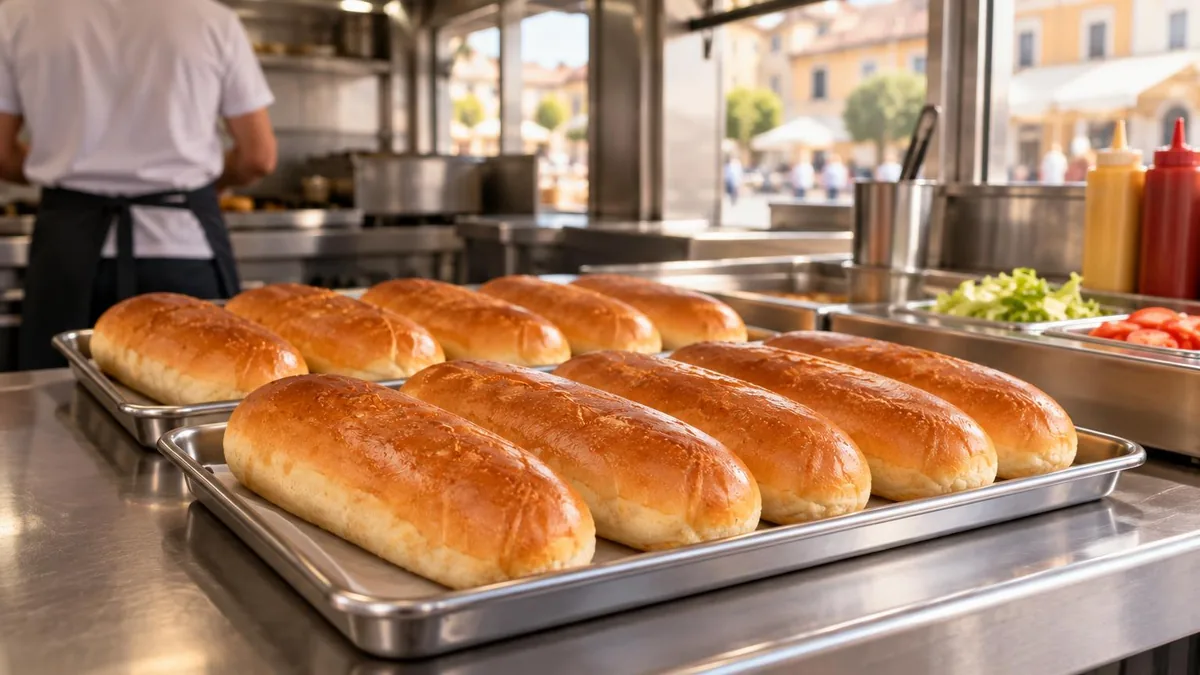
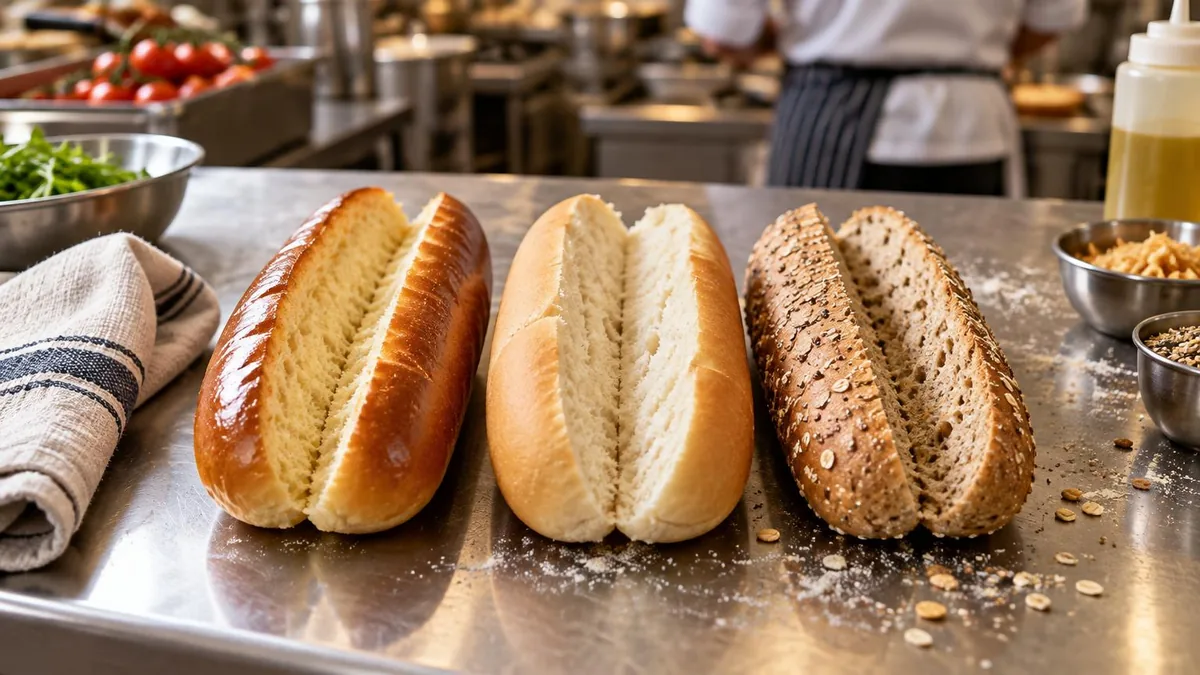
This is the bun most customers associate with hot dogs: an elongated shape, a thin, pale crust and a dense, soft crumb. The recipe typically includes milk or dairy derivatives, a little fat and a small amount of sugar, which give softness and a light golden colour. It's versatile, relatively low-cost, and suits almost any filling. With very runny sauces, a crumb that's too light can turn soggy.
Brioche bun (for sweet preparations only)
The brioche bun has a dough rich in fats, eggs and butter, a glossy crust and a distinctly sweet flavour. It's not suitable for hot dogs or frankfurters: its sweetness doesn't pair with the savoury profile of the meat and sauces. The brioche bun is suited to sweet preparations — desserts with creams or ice cream — not to traditional hot dog service. For a richer profile in gourmet offerings, a toasted split-top bun with butter is the right choice.
Split-top or top-cut bun ("New England style")
The split-top bun is baked side by side with other buns, so the sides remain crust-free, and it's cut from the top rather than the side. The two flat faces can be griddle-toasted with a little butter or fat, giving a crisp outside and a soft inside. The top cut keeps the bun stable in the tray and makes it easier to fill with generous toppings.
Side-cut bun
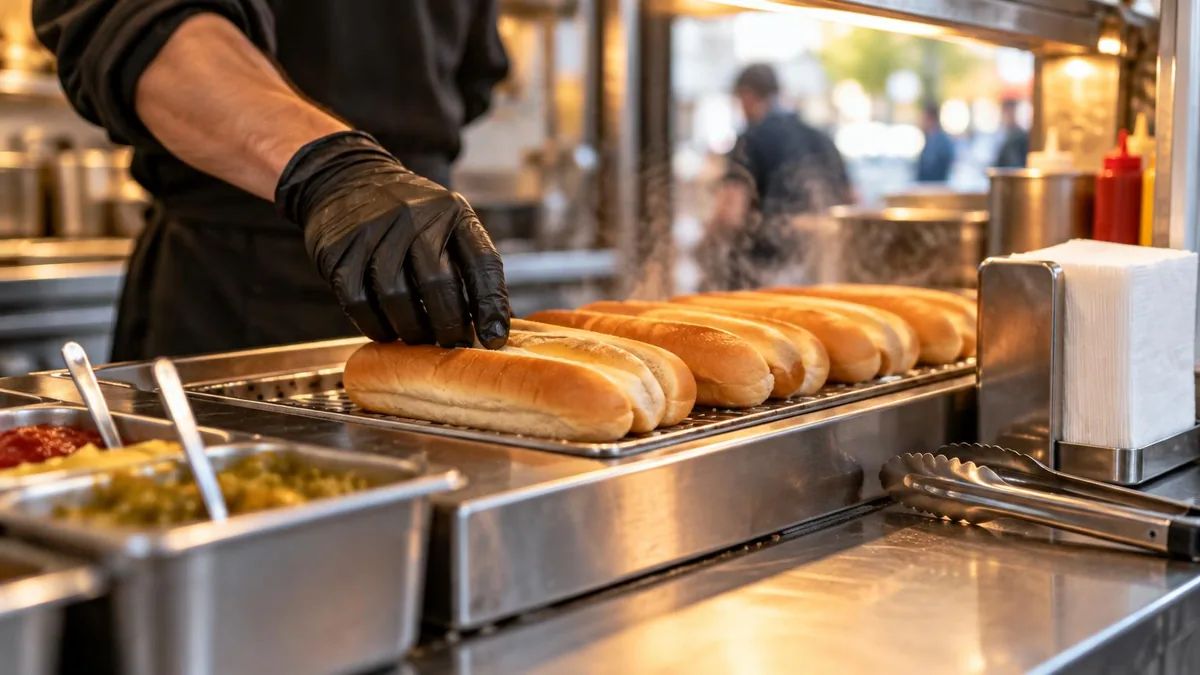
This is the most common format: the bun is scored along one side, often not all the way through, so it stays hinged like a book. It opens easily and holds the sausage well. The side cut is convenient for those buying pre-sliced buns to cut down on prep time; it's worth checking that the scoring is even, though, as cuts that are too deep can cause the two halves to separate during service.
Sesame-topped or poppy seed buns
A seed-topped surface adds crunch, aroma and a more distinctive look. Sesame is common on soft milk buns; poppy seeds are typical of certain American traditions. Note: sesame is one of the allergens listed in Annex II of Regulation (EU) 1169/2011, and must therefore be declared to the customer.
Pretzel bun
The pretzel bun is dipped, before baking, in an alkaline solution that gives it its characteristic glossy brown crust and flavour; it's usually finished with coarse salt. It has a denser structure, holds up well to sauces and mustard, and pairs naturally with German or Bavarian-style sausages. It's a bun for a speciality menu, with a bold flavour.
Baguette-style or Nordic hollow bun
In some Northern European countries, hot dogs are served in a small baguette-style loaf that's hollowed out lengthways rather than cut open: the sauce is poured into the hole and the sausage is slotted in. It's practical to eat standing up, with less dripping, and it stands out visually from the usual offer. It does, however, require suitable equipment (often a pointed heater that warms and hollows out the bun) and a thin-crusted bun, otherwise it becomes tough to bite into.
Wholemeal or mixed-flour buns
Hot dog buns made with wholemeal flour or a share of other flours and grains are also available. They have a darker colour, a more rustic taste, and a crumb that's generally less soft. They can broaden the menu for those looking for a different flavour profile; they should be presented for what they are — a matter of taste — without attributing any health qualities to them.
Pairings with frankfurters and sausages
There are no fixed rules, but a few practical criteria can help:
| Type of sausage | Bun that pairs well | Why |
|---|---|---|
| Classic thin frankfurter | Soft milk bun, side-cut | Delicate flavour, neutral bun that doesn't overpower |
| Thick or spiced sausage | Split-top, milk bun | Structure that holds up to intense flavours |
| German or Bavarian-style sausage | Pretzel bun | Traditional pairing, holds up to mustard |
| Long, thin frankfurter | Nordic hollow bun | Fits well into the hole, less dripping |
| Grilled sausage with vegetables | Toasted split-top, wholemeal | Stable base for generous toppings |
The underlying rule is proportion: the bun should be as long as the sausage, or just slightly shorter, so the customer finds meat in every bite. A diameter that matches the thickness of the frankfurter keeps the bun from being left empty or, conversely, from splitting.
How to choose for your venue
Before deciding, it's worth running a field test with the same sauces, the same toppings and the same timings as your actual service. Some useful questions:
- How much time passes between preparation and consumption? The longer it is, the more the bun needs good structural hold.
- How is the bun regenerated: steam, griddle or oven? Brioche buns and sweetened buns brown quickly.
- How many bun types can you realistically manage? Every extra format means an extra stock to rotate.
- What allergens does the bun introduce (milk, eggs, sesame, mustard in sauces)? They must all be declared.
A well-built menu often combines a "base" bun for the core offer with one or two speciality buns for higher-priced items.
Frequently asked questions
What's the most versatile hot dog bun to start with?
Generally, the soft milk bun with a side cut: it pairs with most frankfurters and sauces, and it's simple to regenerate and keep in stock. From there, a speciality bun, such as the pretzel bun, can be added for gourmet offerings.
What's the difference between top-cut and side-cut buns?
The side cut scores the bun along one side and leaves it hinged like a book; the top cut, typical of the split-top bun, opens the bun from the top and leaves two flat, crust-free sides suited to toasting. The split-top bun is more stable standing up and holds generous toppings better.
Does a sesame-topped bun need special care?
Yes. Sesame is an allergen that must be declared under Regulation (EU) 1169/2011, and loose seeds can end up on other preparations. It's best to store it separately and use dedicated utensils when preparing an item for a customer who has flagged the allergy.