How to heat hot dog buns: steaming, griddle, oven and grill
Steaming, griddle, oven or grill: how to heat hot dog buns in service, which method suits your venue, and mistakes to avoid.
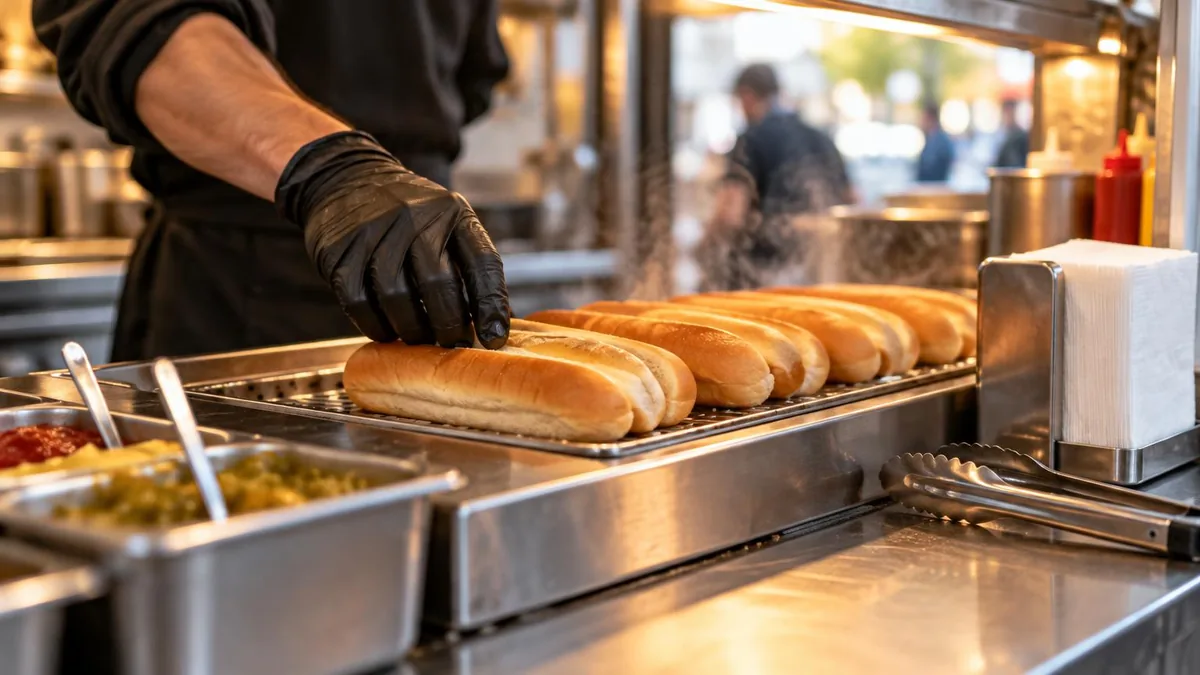
A hot dog is all about a few quick bites, and the bun is half the experience. Served cold it falls flat and tends to split along the cut; properly warmed, it turns soft again, smells great and holds the sausage and toppings together. Understanding how to heat hot dog buns is therefore a service decision as much as a flavour one: it depends on your equipment, your volumes and the type of bun. Here we compare the four most common methods, steaming, griddle, oven and grill, along with their limitations and the mistakes seen most often.
Before heating: the bun needs to be ready
Heat can't fix a bun that's been handled poorly. Before service, it's worth checking three things:
- thawing completed: if the bun arrives frozen or blast-chilled, it needs to be thawed according to the producer's instructions, usually still in its sealed packaging. Timings, stock levels and rotation are covered in the guide on blast-chilled or frozen hot dog buns;
- slicing: pre-sliced buns are ready to go; whole ones need to be cut without going all the way through, so the "hinge" can support the weight of the filling;
- quantity: only bring through the buns needed for that shift. Buns that have been heated but not served can't go back into the pack.
Steaming: as soft as from a street cart
This is the classic street-food method: the bun spends a few moments over boiling water, in a basket, a steamer or the steam drawer of a hot dog cart.
What it delivers: a warm, moist and very soft crumb, with a crust that stays pale and tender. It's the result expected from a classic hot dog with sausage, mustard and onion.
How to do it: bun at room temperature, a few pieces at a time, for a short period that needs to be tested on your own equipment. The bun should never touch the water or sit under a lid where condensation drips onto it.
The limitation: steaming doesn't forgive delay. A bun left too long in the basket turns soggy and rubbery; one taken out too soon cools down quickly. It works when the step from steamer to customer is immediate.
Griddle: the crust that holds up to sauces
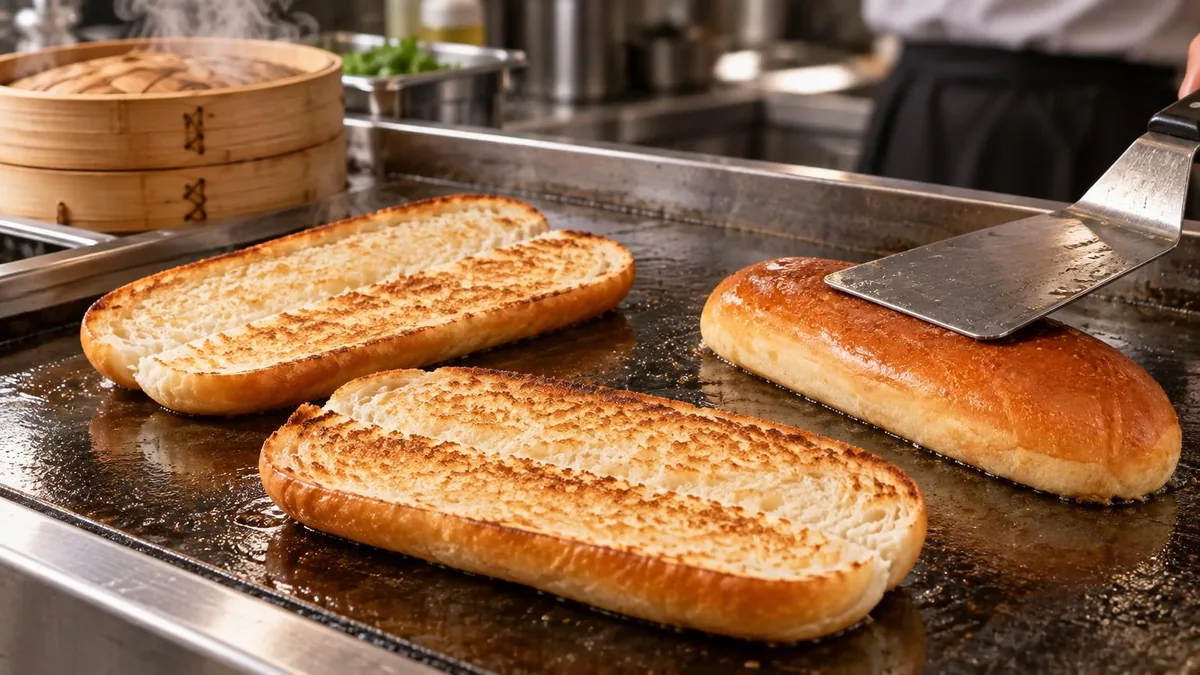
The bun is opened and placed cut-side down on the griddle, dry or with a thin layer of butter. With top-sliced buns, the two flat sides can also be toasted, turning golden and crisp.
What it delivers: a dry, slightly crisp surface on the inside that slows down the absorption of sauces and juices, creating a clear contrast with the soft crumb.
How to do it: griddle at a moderate, clean temperature, a few seconds per side, with light pressure from the spatula. Buns with higher sugar and fat content colour quickly, so they need to be watched closely.
The limitation: it takes up griddle space, the same surface used for sausages and onions. During peak times this can become a bottleneck, unless a dedicated area or separate griddle is set aside for the buns.
Oven: many buns at once
The oven comes into its own when numbers go up: catering, events, banquets, the busiest part of the lunch service.
What it delivers: many warm buns ready at the same time, with a consistent result from one piece to the next.
How to do it: on a tray, buns closed and placed close together, moderate temperature for a few minutes. An oven with a steam or combi function helps prevent the crust from drying out; in a conventional oven, the tray can be covered. Here too, timings and temperatures depend on the oven and the type of bun: run two or three tests and record the result in the prep sheet.
The limitation: dry heat dries out. A few extra minutes and the bun becomes crumbly, splits along the cut and loses its softness. It's better to heat small batches several times than to prepare one large tray that ends up waiting around.
Grill: for outdoor service and character
On the grill, the bun picks up dark grill marks and a smoky note that pairs well with grilled sausages and hot dogs. It's the natural method for outdoor events, parties and food trucks working with charcoal or gas grills.
How to do it: bun open, cut side towards the heat, in the cooler zone of the grill, for a few seconds, turning it only once.
The limitation: the line between toasted and burnt is thin, and fat dripping from the sausages can cause flare-ups. It needs someone dedicated to watching the buns and nothing else, at least during busy periods.
How to heat hot dog buns: which method to choose
| Situation | Best method | Why |
|---|---|---|
| Street cart or kiosk, classic hot dog | Steaming | Softness, immediate service, minimal equipment |
| Pub or venue with a griddle, gourmet options | Griddle | Crisp crust, holds up to sauces and rich toppings |
| Catering, events, large volumes | Oven | Many consistent buns ready at the same time |
| Outdoor events with grilled sausages | Grill | Look and aroma consistent with the cooked meat |
The type of bun matters too: a soft milk bun works well steamed, a top-sliced bun is made for the griddle, and richer buns should be heated with moderate heat. For guidance on the different types, see the guide to hot dog bun types; to choose the right length and weight for your sausage, see the page on hot dog bun wholesale sizes.
The most common mistakes
- Heating a bun that's still fridge-cold or not fully thawed: the outside scorches while the centre stays cold and damp.
- Heating too far in advance: a bun kept warm and set aside dries out or, if sealed in a container, turns damp with condensation.
- Using the microwave as a service method: the bun comes out warm and soft, but turns rubbery quickly as it cools. It may work in an emergency, not as a standard service method.
- Griddle or grill too hot: the surface burns before the inside warms through.
- Leaving the bun in the steamer: just a few extra moments are enough to make it mushy.
- No written procedure in place: if every member of staff heats buns their own way, customers get a different hot dog every visit.
Frequently asked questions
Does a hot dog bun always need to be heated?
In foodservice, almost always yes: heat restores softness and aroma and makes the bun more pliable, so it's less likely to split when filled.
Is steaming or the griddle better?
They give two different results. Steaming produces a soft, moist bun, suited to a classic hot dog served immediately; the griddle produces a dry, crisp surface that holds up better to generous sauces and toppings.
How long before service can the bun be heated?
As little as possible: ideally, heat it at the moment of order or in small batches in the minutes leading up to a peak. A bun that's heated and then left waiting quickly loses its qualities.
Can a bun be heated while still frozen?
Only if the producer's label or technical sheet allows it. Otherwise, the bun must first be thawed according to its instructions, and only then heated.
How can you stop the bun splitting along the cut?
With a cut that isn't too deep, a bun at room temperature before heating, and heat that doesn't dry it out. If splitting happens often, it's also worth reviewing the size and length relative to the sausage: the most common questions are gathered in the FAQ on hot dog buns.