Gourmet Hot Dogs for Pubs: 5 Menu Ideas to Pair with Beer
Five gourmet hot dog ideas for your pub menu: beer pairings, choosing the right bun, mise en place and service tips for busy evenings.
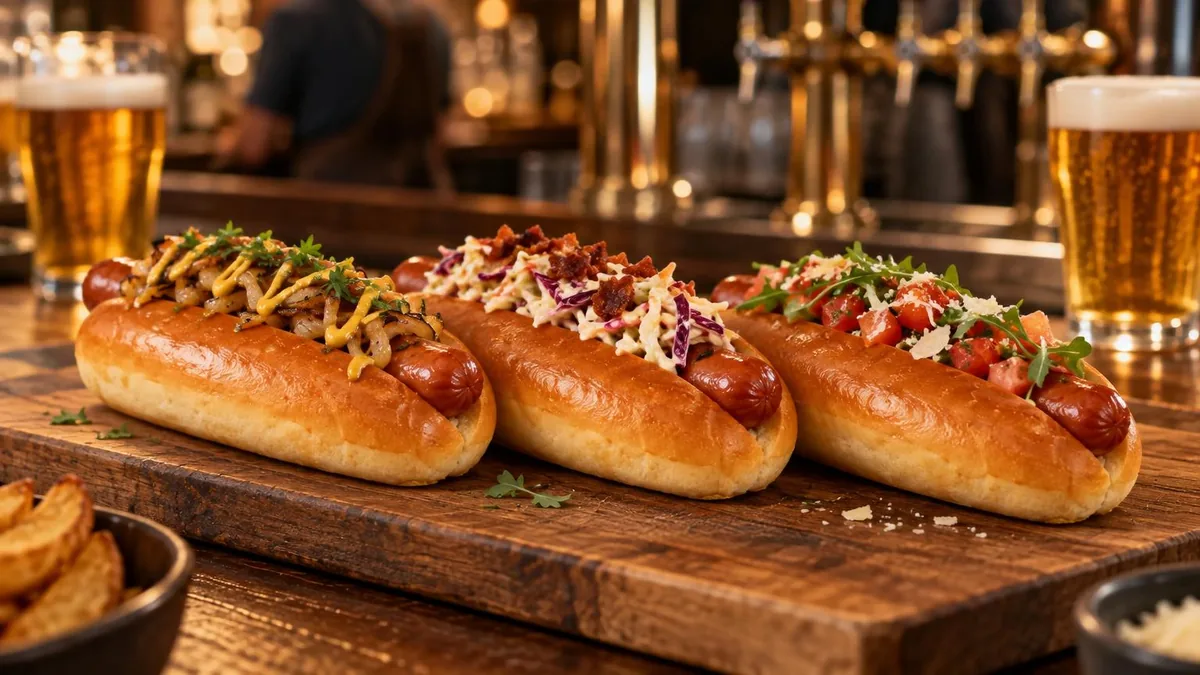
In a pub, the hot dog works because it is hand-held food, quick to serve and easy to pair with a beer. Precisely because it is such a simple preparation, what sets you apart from the pub next door comes down to detail: the quality of the sausage, the contrast of textures, the choice of bun. This guide offers five menu ideas designed for a pub, with practical advice on pairings, mise en place and how to organise service.
Why gourmet hot dogs work in a pub
Pub customers want something substantial that can be eaten without cutlery and that goes with a drink without slowing down the evening. The hot dog meets all three requirements and, unlike a restaurant dish, it can be prepared in a few minutes even from a small kitchen.
The operational advantage is ingredient versatility: with around ten base items (sausages, sauces, vegetables, crunchy toppings) you can build several different recipes, cutting stock and waste. The key is to design the menu as a system, not as a collection of unrelated dishes.
Start with the bun
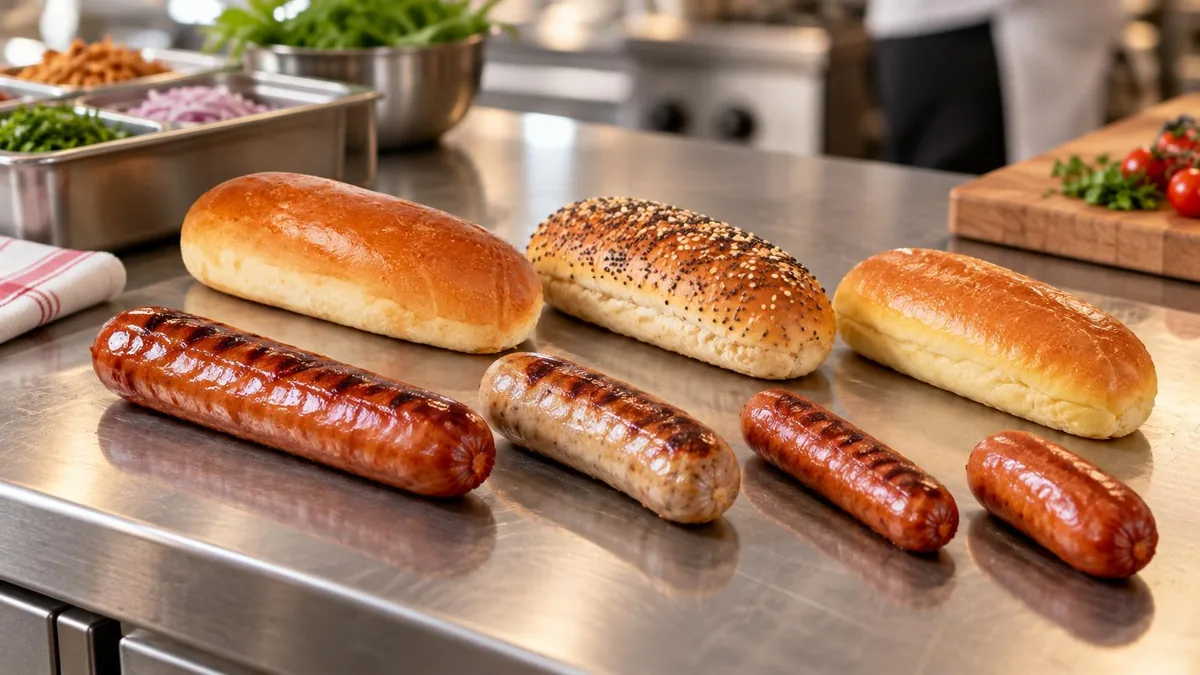
The bun is the part the customer touches first, and it decides whether the sandwich holds up to the last bite. It needs to be soft but structured, able to hold sauces and toppings without falling apart. If you want to find your way around the different types, the guide to bun types for foodservice is the place to start.
As a general rule, these work well on a pub menu:
- classic bun, neutral and versatile, ideal for traditional recipes;
- seeded bun, which adds crunch and character to more rustic sausages;
- potato bun, with a soft, slightly sweet crumb, suited to moist fillings such as pulled pork;
- coloured bun, for a visually striking option to feature as a special;
- gluten-free bun, to be handled with the proper procedures (more on this below).
Keep the brioche bun for desserts: for savoury recipes, the options above are the better choice.
The 5 menu ideas
1. The Classic Pub Dog
This is the reference recipe, the one that has to be on the menu. A good-quality sausage or frankfurter, well-drained sauerkraut, wholegrain mustard and crispy onion. The contrast between the acidity of the sauerkraut and the crunch of the onion gives the sandwich its balance.
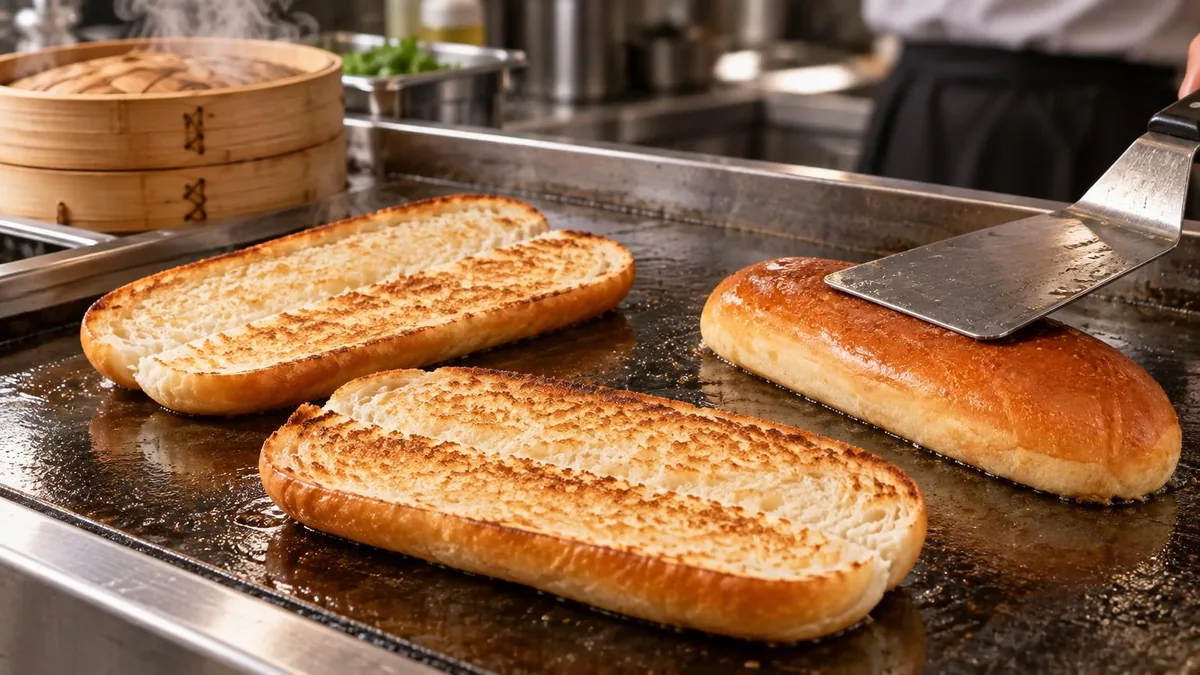
Recommended bun: classic bun, lightly toasted on the griddle. Pairing: a pale, clean-tasting beer.
2. The Bavarian
A German-style sausage, onions slowly stewed with a little beer, sweet mustard and a few thinly sliced gherkins. This recipe speaks directly to pub customers, because it links the dish to the drink in their glass.
Recommended bun: seeded bun, to add structure and a more rustic side. Pairing: an amber beer or a weiss.
3. The Barbecue
Slow-cooked pulled pork or shredded meat, crunchy coleslaw and barbecue sauce. This is the most indulgent option and also the most demanding for the bun, because the filling is moist and generous.
Recommended bun: potato bun, which absorbs without giving way. Pairing: a dark beer or a malty red ale. A practical tip: serve part of the sauce in the bun and part on the side, so the bun does not go soggy while the order waits.
4. The Spicy Mexican
Spiced sausage, fresh tomato and onion salsa, guacamole, sliced jalapeños and a drizzle of sour cream. The play here is between hot, fresh and creamy. Keep the heat moderate so customers can turn it up with a sauce on the side.
Recommended bun: classic or coloured bun, if you want a showpiece effect. Pairing: a crisp lager or a citrusy beer.
5. The Veggie
A quality plant-based frankfurter, grilled vegetables, chickpea cream or yoghurt sauce, and fresh herbs. Today every pub menu should offer at least one meat-free option, prepared with as much care as the others and not treated as an afterthought.
Recommended bun: seeded bun. Pairing: a wheat beer or a hoppy pale ale.
How to build a balanced menu
Five recipes is a manageable number: three meat options with different profiles, one spicy and one vegetarian. Share ingredients such as onion, base sauces and vegetables across the recipes, so mise en place stays contained.
Some useful criteria:
- limit bun formats to two or three types, to simplify ordering and storage;
- differentiate the recipes clearly, with recognisable names and a short description on the menu;
- include a “special of the month” to test new ideas without overhauling the menu;
- calculate the cost of each recipe including bun, sausage, toppings and sauces, to check your margin before setting the price.
To estimate how many buns to order based on sales, the article on formats, bun weights and calculating wholesale requirements can help.
Heating and assembling during evening service
During peak hours, a warm, fragrant bun makes the difference. Steam, griddle, oven and grill each give different results: you can explore the pros and cons of each method in the guide on how to heat hot dog buns.
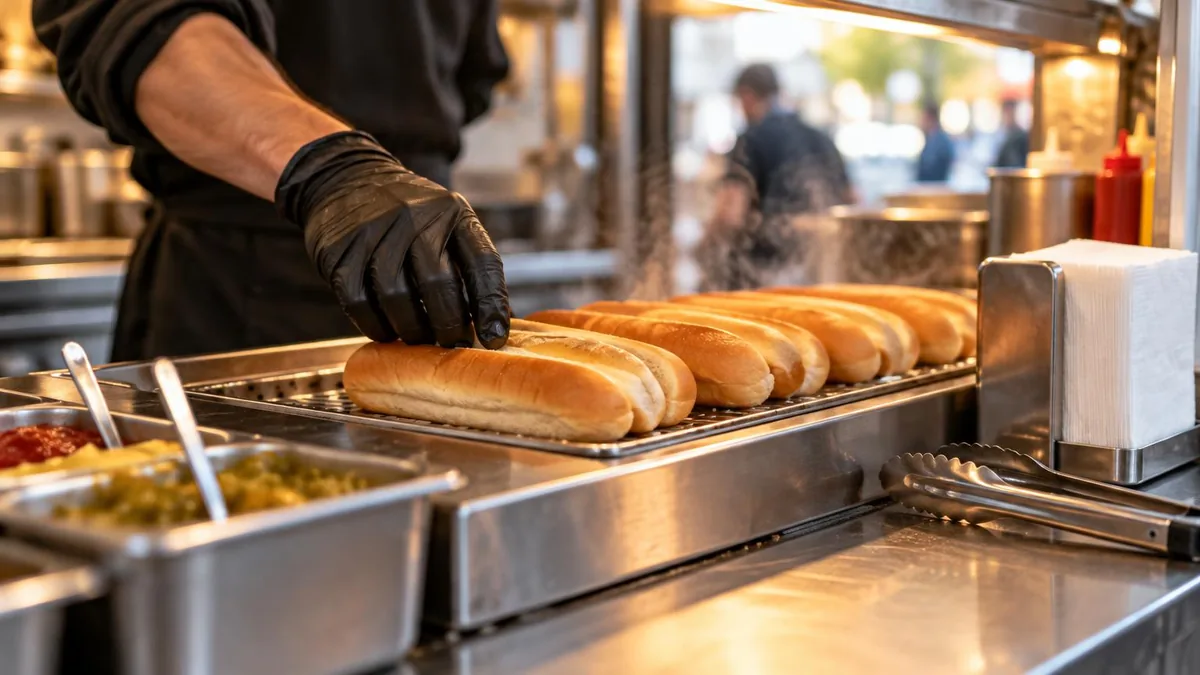
For smooth service, organise the station in sequence: bun, sausage, sauces, toppings, closing. Keep hot bases in suitable containers and prepare cold toppings in trays within easy reach, so each sandwich takes only a few movements.
If you manage stock with blast-chilled or frozen product, it is also worth reading the advice on storing and regenerating buns: proper regeneration avoids dry buns at the end of the night.
A gluten-free option on the pub menu
Offering a gluten-free sandwich widens your customer base, but it demands rigour. The wording “gluten-free” may only be used within the terms of Reg. (EU) No 828/2014, that is, for products with a gluten content not exceeding 20 mg/kg. In the kitchen, correct handling means written procedures, separate work surfaces and utensils, staff training and the use of certified products.
In an environment where flour is handled and griddles and fryers are shared, the risk of contamination must be assessed carefully and must never be played down in communication with the customer. For reference guidance, it is useful to consult the resources of the Italian Coeliac Association (AIC). Rules, handling and communication are covered in depth in this guide to gluten-free hot dog buns.
Artisan or industrial: what suits a pub
The choice depends on volumes, space and the consistency you are looking for. An artisan product can give a distinctive character, while an industrial one generally offers regularity and easy supply. The comparison is developed in the article on artisan or industrial hot dog buns.
Frequently asked questions
How many hot dogs should I put on a pub menu?
For a venue that does not start out as a hot dog bar, between three and five options are generally enough: they cover the main tastes without complicating the kitchen. Start with the most requested recipes and assess over time which ones to replace.
Which bun should I choose for a hot dog with a lot of sauce?
If the filling is generous and moist, a potato bun or a classic bun with a compact crumb holds up better. Lightly toasting the inside helps create a barrier against moisture; serving part of the sauce on the side reduces the risk of the sandwich falling apart.
Can I offer a gluten-free hot dog even with a small kitchen?
Yes, but only if you can set up reliable separation procedures: a dedicated space, separate utensils, trained staff and certified products. If you cannot ensure correct handling, it is better not to offer it and not to use wording that creates expectations you cannot sustain.