Sausage and Bun Pairing: How to Choose the Right Hot Dog Bun
Hot dog sausage and bun pairing: length, diameter, crumb and toppings to help you choose the right hot dog bun and serve balanced hot dogs.
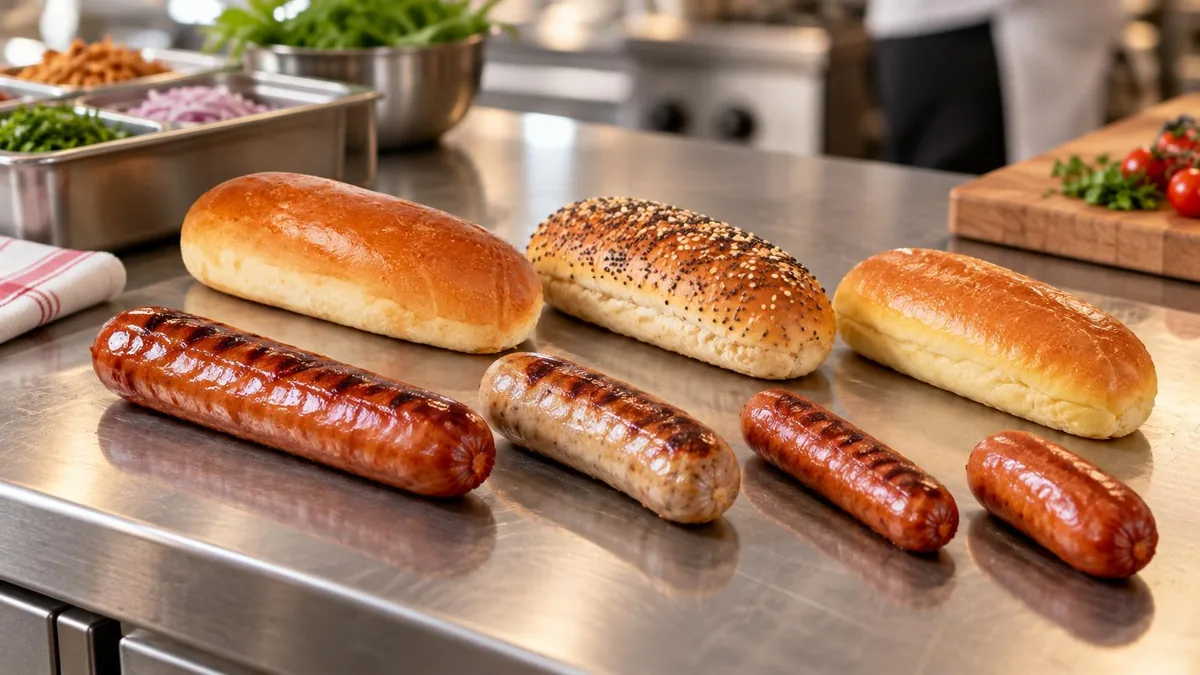
A hot dog works when sausage and bun look made for each other: the sausage shouldn't stick out awkwardly, and the bun shouldn't disappear under the toppings. The sausage and bun pairing may seem like a detail, but it affects kitchen yield, speed of service and customer satisfaction. This guide sets out the practical criteria for choosing well, from size to crumb texture.
For an overview of the product families, start with Hot dog buns: a guide to bun types for foodservice, then come back here for the practical side of the pairing.
Why the pairing matters
The sausage brings flavour, juiciness and a certain firmness to the bite. The bun brings softness, structure and the ability to hold sauces and toppings. If one of the two dominates, the balance is lost: a bun that is too thick masks the taste of the meat, while one that is too fragile falls apart at the first sauce.
There is an operational side too. A wrong pairing slows the line down: staff have to fix, cut, add or break things. A correct pairing makes assembly quick and repeatable, even at peak times.
Length and diameter: the first check
The starting rule is simple: the bun should be slightly longer than the cooked sausage, so that the ends are covered or just peek out. As a general guideline, a margin of a few millimetres per side is more than enough; these are indicative values, to be checked on the product you actually use.
For diameter, what matters is the relationship between the two cross-sections:
- the sausage should fit into the cut without forcing the bun open;
- there should be room for sauces and toppings without the bun tearing;
- the bun shouldn't be so wide that the sausage 'rattles' around inside it.
Remember that sausages change size when cooked: some shorten, others swell. Always test the pairing with the cooked product, not the raw one. For formats and bun weight in general, see Wholesale hot dog buns: sizes, bun weight and calculating requirements.
Type of sausage, type of bun
There is no universal bun: it makes sense to think in product categories.
- Classic Frankfurter-style sausage: delicate taste and even texture. It works well with the classic bun, soft and neutral, which leaves room for the flavour of the meat.
- Chicken or turkey sausage: a lighter profile on the palate. Better with a simple bun, without strong notes that would overpower it.
- Pork sausage or bratwurst: larger, more spiced, often heavier. They need a more structured bun that can handle the weight and juiciness; a bun with seeds or a potato bun are excellent options.
- Smoked or very flavourful sausage: the crumb should be as compact as needed; a bun with seeds adds a crunchy note that pairs well with the smokiness.
- Plant-based alternatives: texture varies greatly from product to product. Start from a neutral bun and assess case by case.
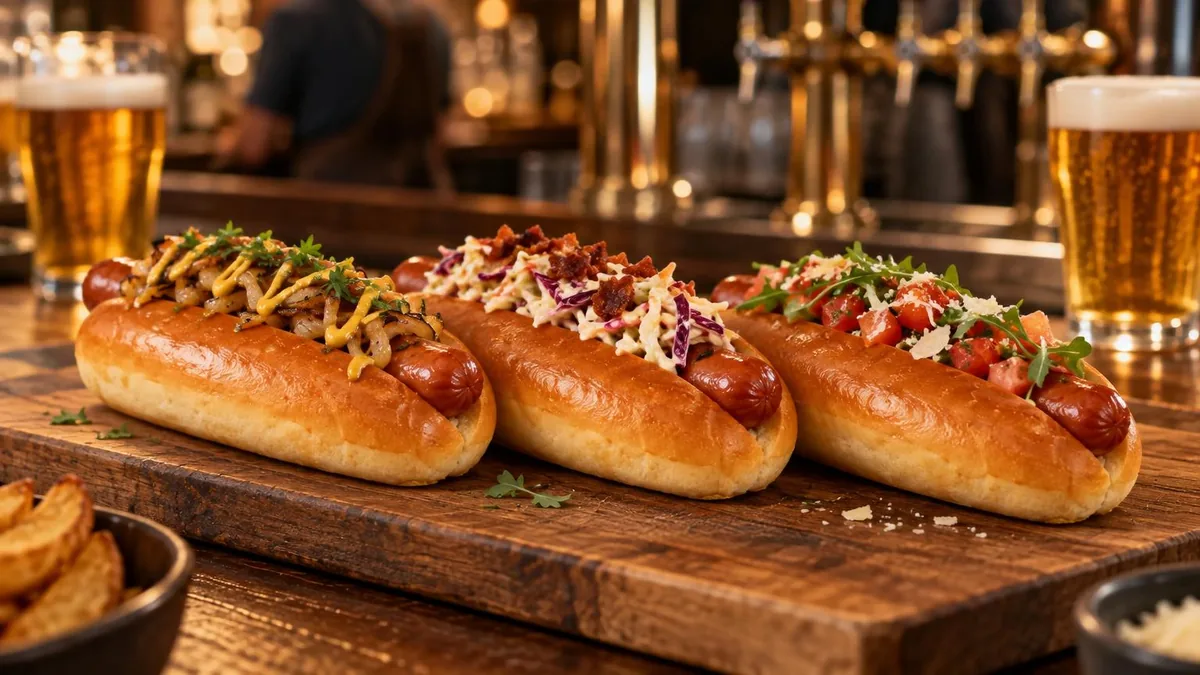
For pub menus, where hot dogs are often richer and paired with beer, you'll find ideas in Gourmet hot dogs for pubs: 5 menu ideas to pair with beer.
Crumb texture and holding toppings
The crumb makes the difference when sauces come into play. With wet toppings (stewed onions, creamy sauces, sauerkraut) you need a tighter crumb and a base that doesn't soak through straight away. With dry toppings or few ingredients you can go for a very soft bun.
A useful criterion is the 'ten-minute test': assemble a complete hot dog, leave it to rest for a short while and see whether the base holds. If it falls apart, either the bun is too tender for that recipe or the toppings are too wet.
Heating and toasting: the final piece
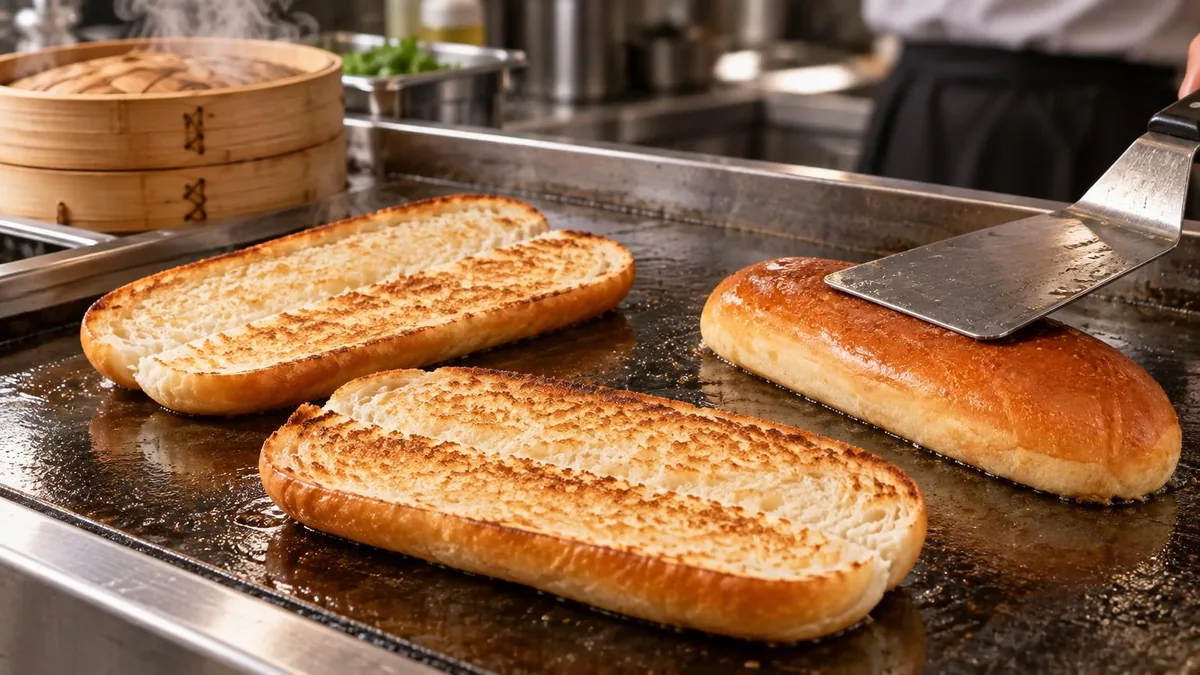
The same bun can behave very differently depending on how it is heated. Steam softens, the griddle creates a slightly crisp surface that protects against the toppings, the oven dries and the grill adds toasted notes. Choose the method according to the bun and the recipe: all the details are in How to heat hot dog buns: steam, griddle, oven and grill.
A practical tip: lightly toasting the inside of the cut, with a little butter or simply dry, creates a barrier between bun and sauces and makes the hot dog more stable in the hand.
Seeded, coloured and potato buns: when to use them
Bun variants can become part of a venue's identity.
- Classic: the most versatile choice, suitable for almost all sausages.
- With seeds: adds aroma and texture; ideal with flavourful sausages.
- Potato: soft, slightly elastic crumb that holds the weight of larger sausages well.
- Coloured: a showy effect for themed menus, to use when the look matters as much as the taste.
The brioche bun is not among these choices: it is a base designed for sweet preparations and should not be used for hot dogs or other savoury recipes.
The gluten-free case
For those offering gluten-free hot dogs, the pairing needs to be checked with even more care, because crumb and hold can differ from traditional bread. The term 'gluten-free' may only be used under the terms of Regulation (EU) No 828/2014, that is, below 20 mg/kg. Handling in the kitchen (separation, procedures, staff training) is also part of the service: for more, see Gluten-free hot dog buns: rules, kitchen handling and communication and the guidance of the Italian Coeliac Association (AIC).
How to test a new pairing
Before changing your menu, run a structured test in the kitchen:
- cook the sausage the way you will in service;
- heat the bun with the intended method;
- assemble with the standard quantity of toppings;
- check size, hold, flavour balance and ease of biting;
- repeat with at least two types of bun and compare.
Involve front-of-house and line staff: they are the ones who notice speed and hold problems that a single test misses. If you'd like a summary of the most common questions about the product, there is also Hot dog buns: frequently asked questions from restaurant operators.
Frequently asked questions
Should the bun be longer than the sausage?
In general it should be slightly longer, so the sausage stays well contained. Exact measurements depend on the product: always assess with the sausage already cooked.
Can I use the same bun for different sausages?
Yes, if the sausages are similar in size and weight. If your menu includes very different sausages, it is better to have at least two bun formats or types, so as not to compromise balance and hold.
Which bun holds up best with generous sauces?
A bun with a compact crumb, such as a potato bun or one with seeds, holds better than a very soft one. Toasting the inside of the cut helps create a barrier against the moisture of the toppings.