Gluten-free hot dog buns: regulations, kitchen management and menu communication
What "gluten-free" means under EU Reg. 828/2014, how to avoid contamination in street food, and how to state it correctly on menus.
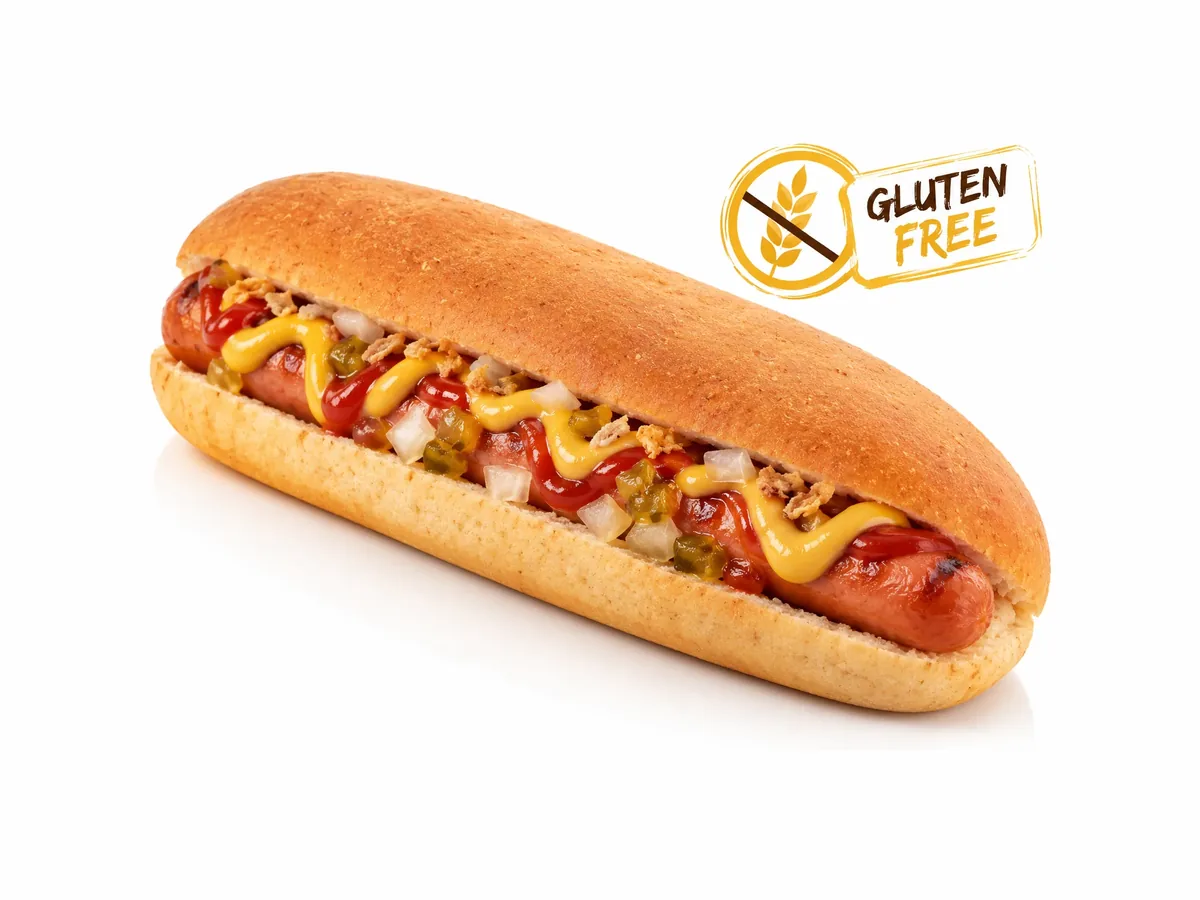
Adding a hot dog with a gluten-free bun to the menu is an increasingly common customer request, but simply buying the right bun is not enough for a venue. Operators need to understand exactly what the "gluten-free" claim means, organise the kitchen to avoid contamination, and communicate the offer correctly, without promises that cannot be kept. This article covers the key points for restaurants, pubs, food trucks and kiosks.
What Regulation (EU) No 828/2014 says
Implementing Regulation (EU) No 828/2014 governs the provision of information on the absence or reduced presence of gluten in food. Two claims are permitted:
- "gluten-free": the product, as sold to the final consumer, contains no more than 20 mg/kg of gluten;
- "very low gluten content" (often shown as "very low gluten content"): the product contains no more than 100 mg/kg of gluten, and the claim is permitted for foods consisting of, or containing, one or more ingredients made from gluten-containing cereals that have been specially processed to reduce the gluten content.
The regulation applies to both pre-packed and non-pre-packed food, which means it also covers what is served in a venue. This has one key implication: the claim applies to the product served to the customer, not just to the bun as purchased. If during preparation the bun comes into contact with flour, crumbs or contaminated surfaces, the finished dish may no longer meet the limit.
Choosing the bun
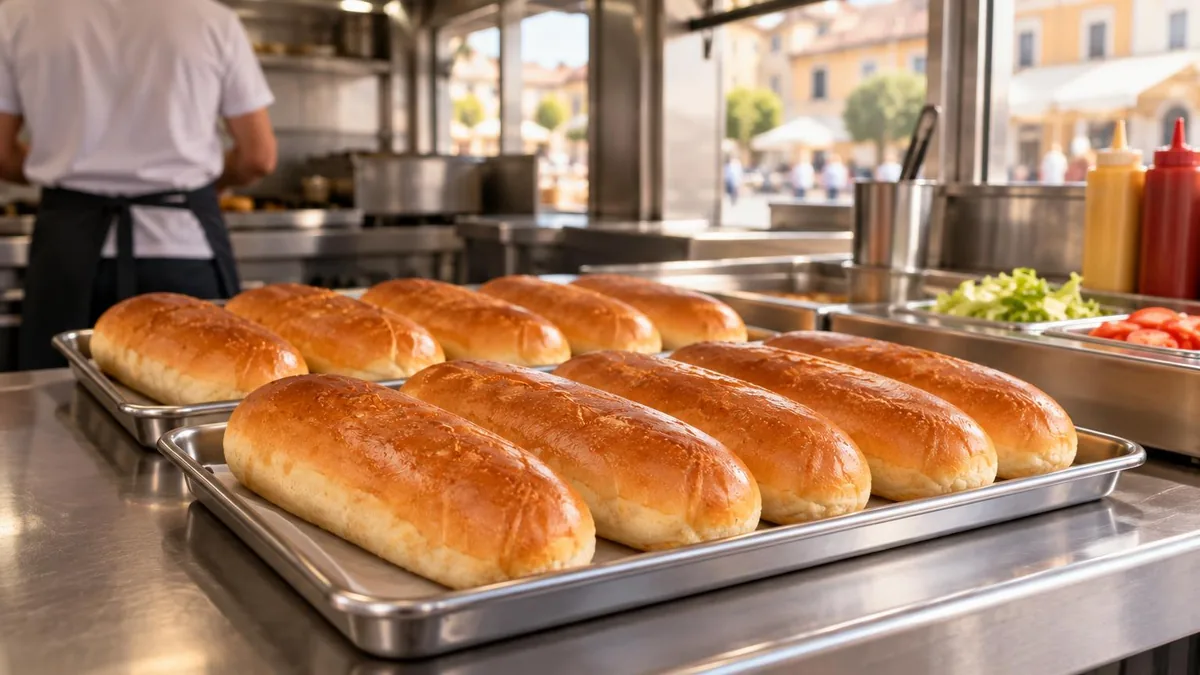
The first step is to buy a hot dog bun that the manufacturer labels as "gluten-free", supported by a technical data sheet listing ingredients, allergens present, and storage and regeneration instructions. Some points to check:
- the exact wording on the label, in line with Regulation (EU) No 828/2014;
- the presence of other allergens: many gluten-free buns contain eggs, milk or soya, or seeds, which must still be declared;
- the format: length and diameter should match the sausage used on the menu, so the bun does not need to be cut or adapted;
- the packaging: single-portion packs or small multi-packs reduce handling;
- the recommended regeneration method: gluten-free buns often have a different structure and respond differently to steam and heat.
The bun's characteristics depend on the manufacturer's recipe: texture and how well it holds up with sauces should be tested under real service conditions.
The real challenge: contamination in the kitchen
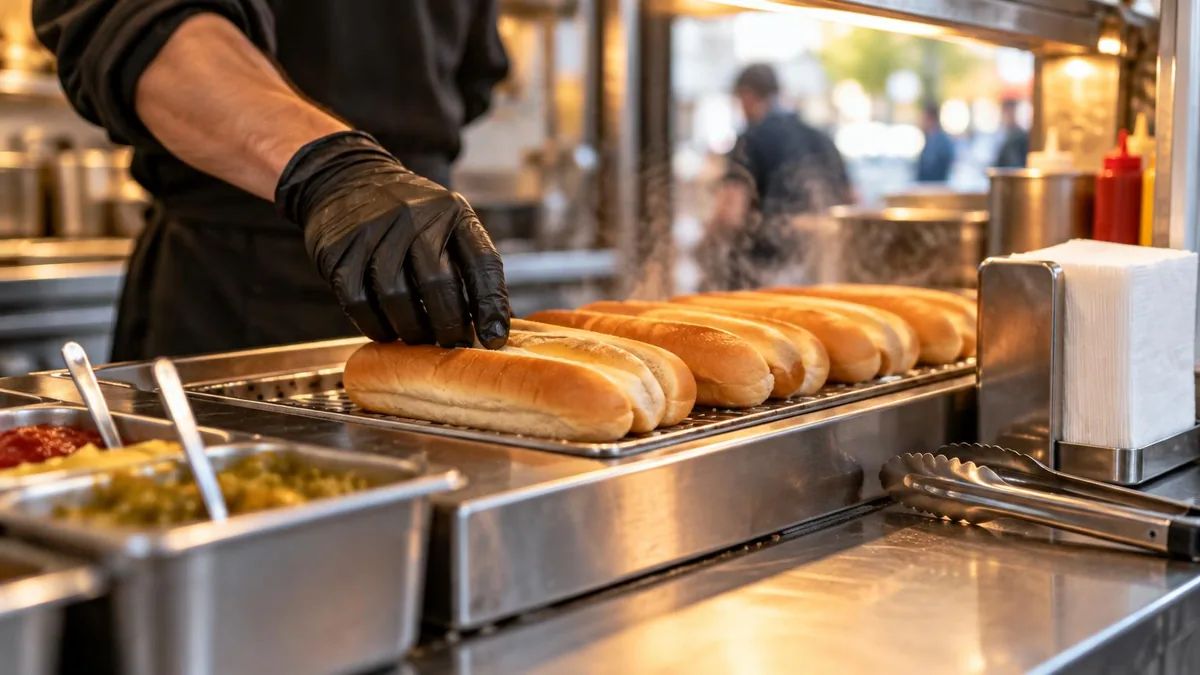
In a venue that works with wheat bread every day, sources of contamination are numerous and not always obvious: crumbs on the worktop, tongs used for all buns, griddles where different buns are toasted, shared steamers, gloves that are not changed, and sauces with spoons dipped in repeatedly. In street food, where space is limited and the pace is fast, the risk increases.
Good separation practices
The following are general good practices, to be incorporated into the venue's HACCP self-control plan with the help of a consultant:
- Separate storage: keep the gluten-free bun in a closed, clearly labelled container, positioned above or away from wheat bread, never underneath it.
- Single-portion packs: opening the pack only at the point of preparation limits contact with the surrounding environment.
- Dedicated tongs and utensils, in a different colour or clearly marked, stored separately.
- A dedicated griddle or, if that is not possible, a separate cooking surface such as a clean tray or baking paper used only for that product; on a shared griddle, wheat crumbs are difficult to remove completely.
- No shared steamer with wheat bread: steam and condensation can carry residues.
- Sauces and toppings in sealed portions or dedicated containers, to prevent a spoon used on other buns from going back into the jar.
- Hands and gloves: wash hands and change gloves before preparing the product.
- Preparing it at a dedicated time, where possible, or in a clean, clear corner of the counter.
- Staff training: everyone needs to know the procedures and why they matter.
Watch out for meat and sauces too
The bun is not the only element. Some sausages, sauces or crispy onions may contain gluten-containing ingredients or be made in facilities that also process them. Every component of the hot dog should be checked against the relevant supplier's technical data sheet.
Allergen information: Regulation (EU) No 1169/2011
Regulation (EU) No 1169/2011 lists, in Annex II, the substances that cause allergies or intolerances, including cereals containing gluten. Information on their presence is mandatory even for non-pre-packed food served in foodservice venues. In Italy, this information can be provided in writing on the menu or in an accessible allergen register, in line with national rules.
For hot dogs, it is worth remembering that, besides gluten, mustard, sesame, milk, eggs, soya and celery are frequently present, all of which are on the list. An up-to-date register, together with technical data sheets for the bun, meat and sauces, makes it easier to give customers precise answers.
Communicating the offer on the menu
Communication needs to be clear and accurate, without any medical promises. Some suggestions:
- use the "gluten-free" claim only if the product as served meets the 20 mg/kg limit and kitchen procedures are able to maintain it;
- if the absence of contamination cannot be guaranteed, say so transparently, for example by stating that the bun is gluten-free but preparation takes place in an environment where gluten-containing products are also handled;
- avoid generic phrases such as "suitable for everyone" or statements relating to health;
- invite customers with specific requirements to let staff know, who must be able to respond appropriately;
- keep technical data sheets on hand in case of questions.
In street food and at events
Food trucks, kiosks and stands have limited space and often only one griddle. In these settings, it may be more realistic to:
- offer the gluten-free bun in a single-portion pack, regenerated separately;
- prepare a dedicated kit (tongs, board, containers) stored in a closed box;
- limit the number of toppings available for the gluten-free option, choosing only those that have been checked and come in sealed portions;
- honestly assess whether conditions allow the claim to be used, or whether a more cautious form of wording is preferable.
Frequently asked questions
Can I write "gluten-free" on the menu if I buy a certified bun?
Only if the product as served also meets the 20 mg/kg limit set out in Regulation (EU) No 828/2014. If there is a risk of contamination with gluten-containing products in the kitchen, the claim may not be accurate: dedicated procedures are needed.
What is the difference between "gluten-free" and "very low gluten content"?
"Gluten-free" indicates no more than 20 mg/kg of gluten in the finished product; "very low gluten content" indicates no more than 100 mg/kg and is reserved for products containing ingredients from cereals that have been processed to reduce gluten.
Can I use the same griddle for both the regular bun and the gluten-free bun?
This is not advisable: wheat crumbs are difficult to remove completely. If a dedicated griddle is not available, it is better to use a separate, clean surface reserved for the gluten-free product and to follow the procedures set out in the venue's HACCP self-control plan.