Opening a hot dog cart or food truck: how to choose the right bun
Practical guide to choosing hot dog buns for stalls and food trucks: space, storage, formats and suppliers.
Why the bun is the first decision to make
Anyone considering opening a hot dog cart or food truck tends to focus first on location, permits and cooking equipment. The bun, however, has a direct impact on perceived quality, service speed and how space is managed on board: it's the element the customer sees and touches first, and the choice should be made before the final menu is set.
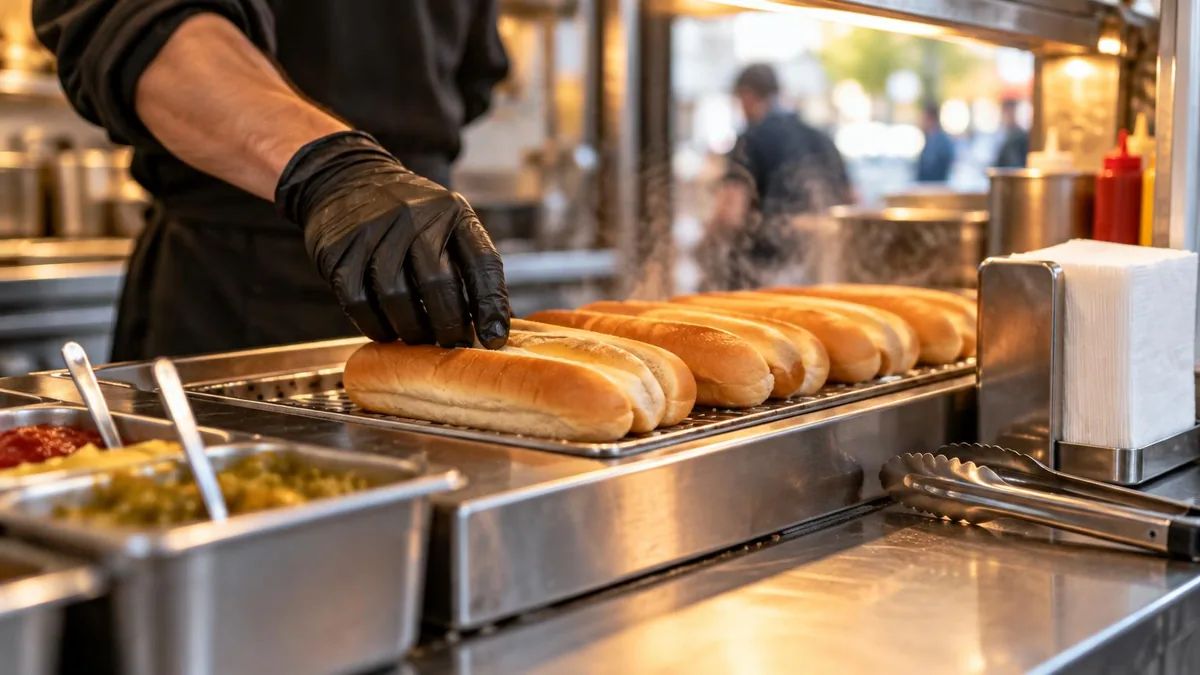
A mobile outlet has different constraints from a fixed premises: limited space, restricted power supply and the need for compact stock. This is why choosing a hot dog bun requires a practical approach that takes daily logistics into account as much as taste.
Space, power and storage: the constraints of a food truck
On board a food truck, storage space is almost always the limiting factor. Fridges and freezers have limited capacity, and this affects both how much bun stock can be kept on board and the size of the packs used.
Operators working with blast-chilled or frozen buns can plan stock with more flexibility, organising regeneration according to the expected customer flow during service. This approach reduces waste on slower days and makes it easier to respond to demand peaks without having to restock every day.
Those who prefer a short-shelf-life fresh bun instead need to organise more frequent deliveries, with all the logistical complications this brings for a mobile unit: loading times, temporary storage space, and managing the unexpected whenever the event or location changes.
Choosing between artisan and industrial buns
There is no single answer to the choice between an artisan bun and an industrial one: it depends on the positioning of the stall, the average price of the finished product and the team's organisational capacity. An artisan bun can enhance a more refined street food concept, but it requires careful stock management and often less flexible supply lead times.
An industrial bun generally offers greater standardisation and predictability, which is useful when working with events, trade fairs or itinerant locations where product consistency matters more than seasonal variation. For a more detailed comparison between the two options, the guide on artisan or industrial hot dog buns looks in depth at the criteria for choosing according to the type of venue.
Formats and bun weights suited to a stall
In a fast-selling context such as a stall or food truck, the bun format needs to match the speed of service: a bun that is too large slows down filling, while one that is too small can look out of proportion to the sausage used.
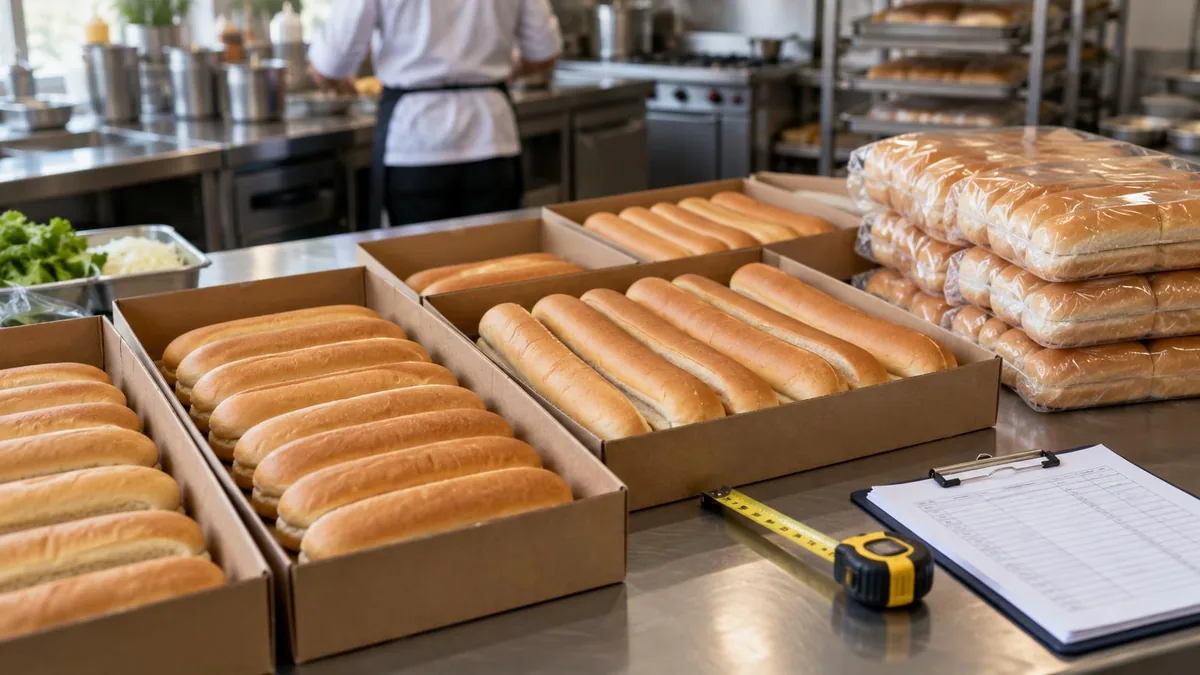
For those buying wholesale, calculating requirements in advance based on the expected number of covers is essential to avoid both stock shortages and unsold surplus. The guide on formats and bun weights for wholesale hot dog buns offers practical guidance for setting up this calculation, a step that needs to be handled with concrete criteria rather than guesswork when starting a new business.
Managing stock without waste
A food truck that frequently changes location, or a seasonal stall, has to deal with less predictable demand than a restaurant with a regular customer base. For this reason, it's worth:
- setting a minimum safety stock based on the peak days observed in the first few weeks;
- favouring pack formats that allow opening only the quantity needed per shift;
- monitoring product turnover to adjust orders over time, rather than fixing quantities indefinitely.
This attention reduces waste and keeps bun costs under control, a factor that affects the overall margin on every hot dog sold.
Gluten-free buns in a mobile setting
Offering a gluten-free option from a stall or food truck requires stricter procedures than a venue with a separate kitchen: the limited space increases the risk of cross-contamination during preparation and storage. Anyone planning to offer this option needs to set up dedicated areas and utensils, even within a compact space like that of a mobile unit.
The term "gluten-free" can only be used in the terms set out in Regulation (EU) No 828/2014, meaning with a gluten content below the threshold established by the regulation; it should not be presented as a general guarantee of suitability for all coeliacs. To organise this part of the service correctly, the guide on gluten-free hot dog buns explains the regulations and practical kitchen management involved.
Those with more operational questions, from choosing the right cut to managing bun stock on the busiest days, can also check the FAQs on hot dog buns, useful for anyone setting up a fast-service operation for the first time.
Frequently asked questions
Is it better to use fresh or frozen buns in a food truck?
It depends on the available space and how often deliveries can be made. Frozen buns offer more flexibility in stock management, while fresh buns require more frequent and carefully organised supply logistics.
What bun format should be chosen for a stall with fast service?
A format that matches the size of the sausage used, allowing quick filling without slowing down customer flow during the busiest periods.
Is it possible to offer gluten-free hot dogs from a food truck?
It is possible, but it requires dedicated procedures to avoid cross-contamination in a limited space, as well as compliance with current regulations on the wording to be used on labels and on the menu.